What Service Design Is and Why It Changes Everything
Every business has a service model. Most founders didn't design it. It formed the way scar tissue forms, around whatever problem showed up first, patched with whatever was available at the time. It works well enough until it doesn't. And when it doesn't, you usually feel the effects long before you find the cause.
Service design is how you find the cause.
At its core, service design is the practice of making the invisible visible. That means mapping every layer of how your business actually delivers value, from what the customer sees and feels, to the operations running quietly underneath that experience. It's not a software tool. It's not a branding exercise. It's a way of looking at your entire business as something that was designed, which means it can be redesigned, on purpose, with intention.
Marc Stickdorn, who co-authored This Is Service Design Thinking, one of the foundational texts in the field, describes it simply: understanding customer needs, problems, and behavior patterns is at the core. But service design goes one step further than most disciplines. It doesn't just look at what the customer experiences. It looks at the full system behind that experience: the people, the processes, the technology, the backstage operations that the customer never sees but always feels.
Think about the last time a business experience surprised you. It could have been in a good way, or a bad one. The moment that made you tell someone about it. That moment was designed, even if nobody in that company called it design. Service design is the practice of making those moments intentional instead of accidental.
The three questions service design asks:
What is the customer actually experiencing, end to end? What is your business actually doing to create that experience? And where are those two things out of alignment?
The blueprint is the tool we use to see all of that at once. You'll build yours in this course.
Write down one thing in your business that you've never looked at directly: a process, a handoff, a customer moment that you just kind of hope is working. That's where we start.
Before You Design Anything: Research, Market Context, and What You Already Have
Most people want to skip this part. Don't.
The reason service design fails in practice, even when the practitioners are skilled and the intent is right, is almost always the same: someone started designing before they knew what they were actually working with. They built a solution to the problem they assumed existed. Then they were surprised when it didn't fit.
There are two things you need to understand before you design anything. What exists in the world around you. And what you already have in your hands.
Market Research
Market research is not a competitor spreadsheet. It's not a one-time survey. It's an ongoing practice of understanding your landscape: who your customers are and how they currently solve the problem you're trying to solve, what alternatives exist, where genuine unmet need lives, and whether the gap you're trying to fill is real or imagined. The Interaction Design Foundation puts it plainly: service design differs from user-centered design because it works to identify the strategic initiatives of the service provider alongside the customer's needs. That means knowing your market isn't optional. It's the foundation.
Asset Mapping
Asset mapping is the work most businesses skip entirely — and the most transformative when done well. Before you can design a better service, you need to know what you're already working with. That means taking a full inventory: not just your product or your website, but the knowledge that lives in people's heads, the relationships that aren't being leveraged, the processes that work quietly and well without anyone having written them down, the reputation you've built without noticing, the tools already in place but underused.
These are your intangible assets. They are real business assets. They simply don't appear on any balance sheet, so nobody accounts for them until someone goes looking.
Together, market research and asset mapping are what we call the Discover phase. You cannot define a problem worth solving until you've done both. Research without asset mapping misses what you have. Asset mapping without research misses what the world needs. You need both before you start drawing anything.
List three things your business has that you've never formally named as an asset. A relationship. A piece of institutional knowledge. A skill. A process that runs well. Write them down. You just started your asset map.
Understanding Your Customer for Real
Most businesses think they know their customer. Most of them are designing for a version of their customer that doesn't fully exist, assembled from assumptions, projections, and the mental model of whoever happened to be in the room when the decisions were made.
The gap between who you think your customer is and who they actually are is where most service failures live.
Personas
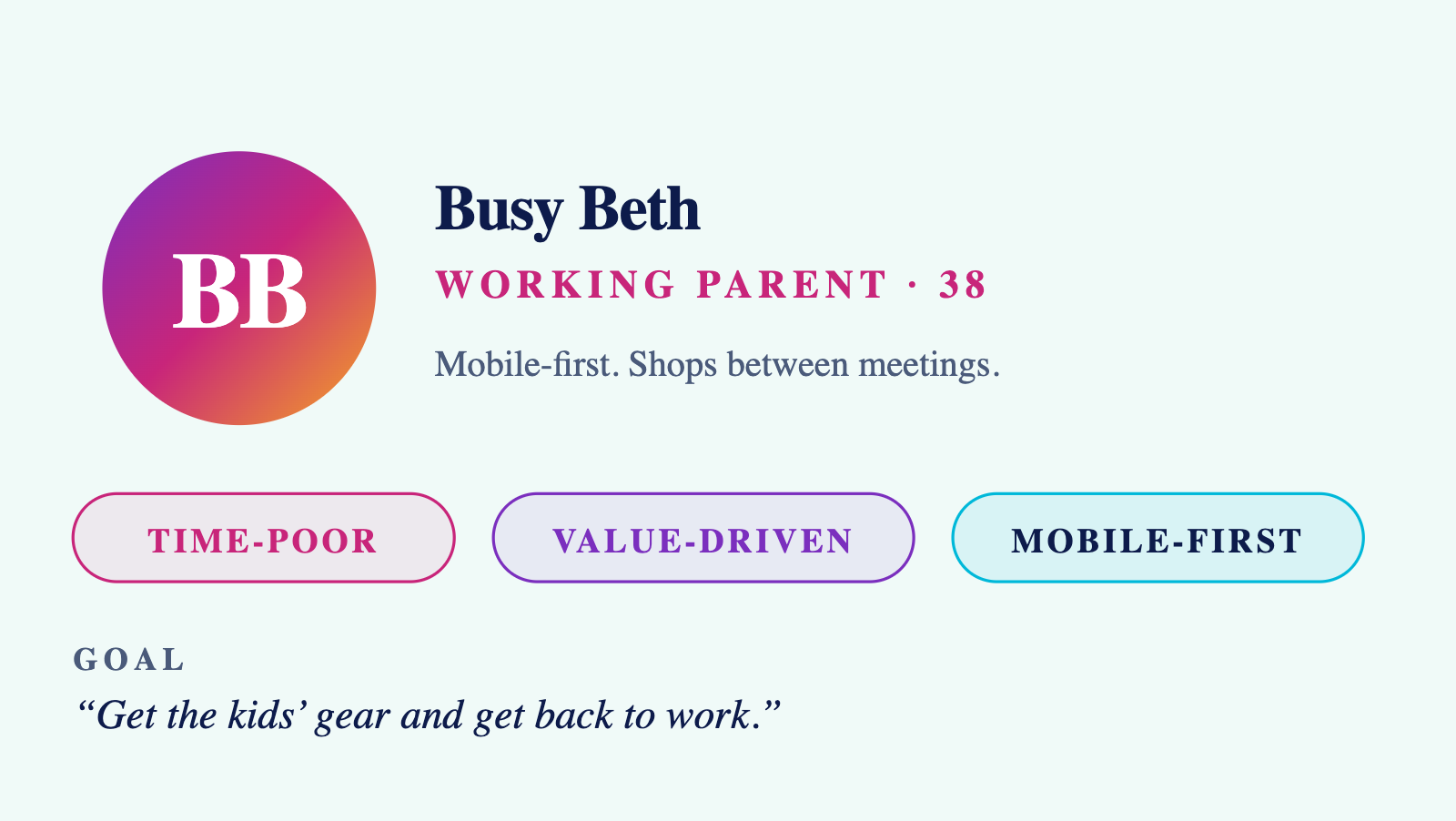
Personas are the tool service designers use to close that gap — but only when they're built from real data. A persona constructed from research looks completely different from a persona constructed from assumptions, and every design decision made from it is correspondingly different. When IDEO developed their human-centered design methodology, they built it on one foundational commitment: observe users in their actual environment, put yourself in their shoes, and let what you find drive the design. Not what you expect to find. What's actually there.
A good persona captures not just who someone is demographically, but what they're trying to accomplish, what's getting in their way, what they value, and how they make decisions.
The Emotional Journey
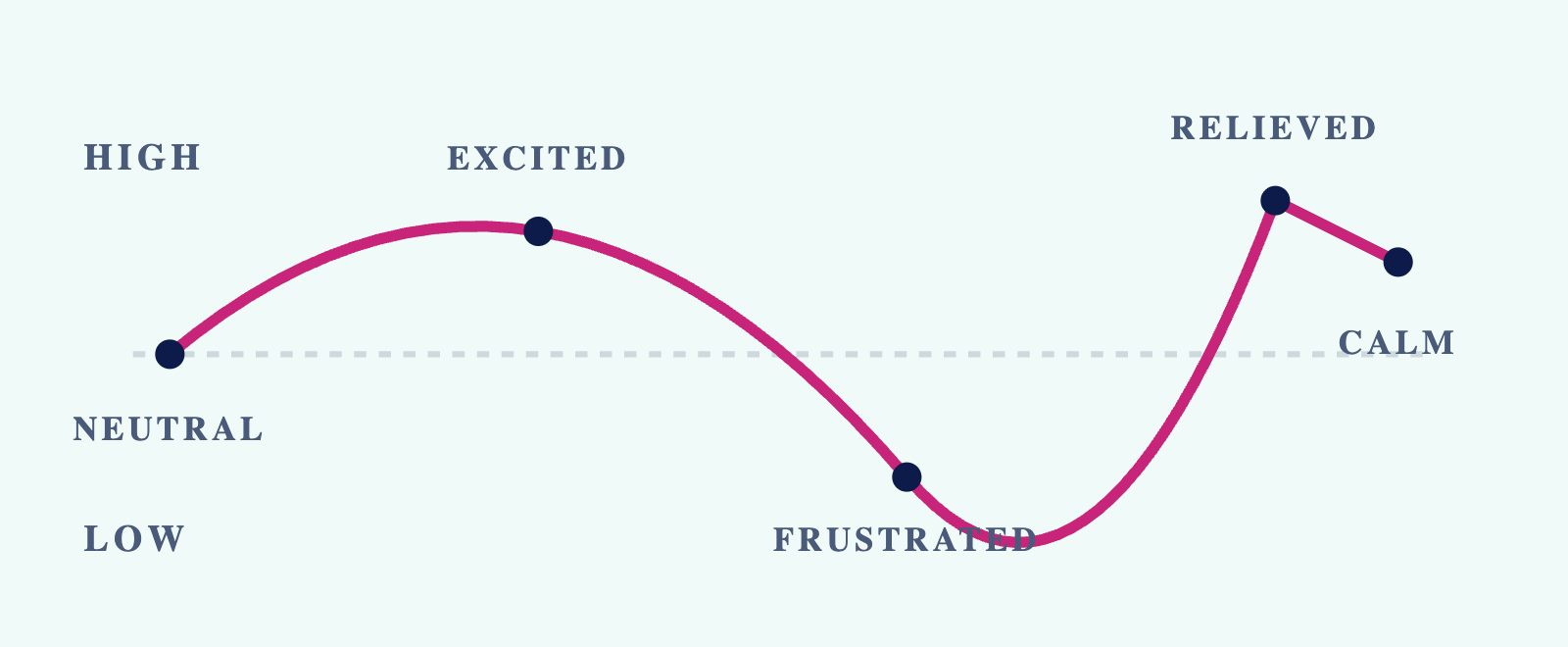
Customers don't evaluate their experience rationally — they evaluate it emotionally. Research by Nobel laureate Daniel Kahneman established what's now called the Peak-End Rule: people remember experiences primarily by their emotional high point, their low point, and how they ended. Not the average. Which means a mostly-good experience that ends on a frustrating note will be remembered as a frustrating experience. Design for the peaks. Protect the ending.
Empathy Mapping
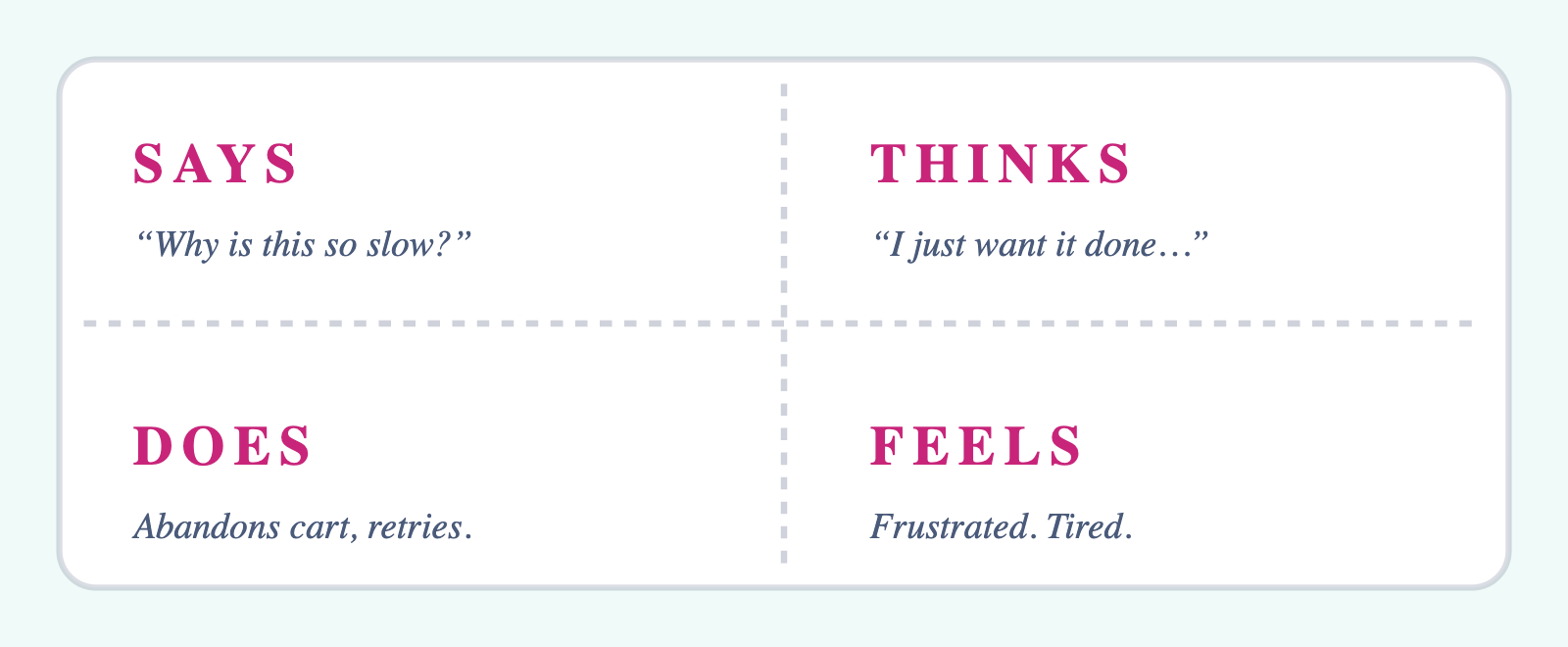
Empathy mapping captures what a customer says, thinks, does, and feels at each stage. It surfaces the gap between what customers tell you and what they actually experience. The most important insights almost always live in that gap.
Pick your most important customer type. Map their emotional journey through your service right now. Not how you want it to feel, how it probably actually feels today. Mark the low point. That's where your next design conversation begins.
Before You Draw: Defining the Problem Worth Solving
This is the step that separates services that work from services that are well-intentioned.
You now know your market. You know your assets. You know your customer. The next move is not to start building. It's to define, clearly and honestly, what problem you are actually trying to solve. Because the most expensive mistake in any service design process is building the right solution to the wrong problem.
Marc Stickdorn has said directly that the linear approach, jumping from research to solution without a definition step, is where years of work get lost. IDEO's design process includes this as a non-negotiable phase: taking everything you learned from research and synthesis, and using it to define the actual challenge before you ideate anything.
How Might We
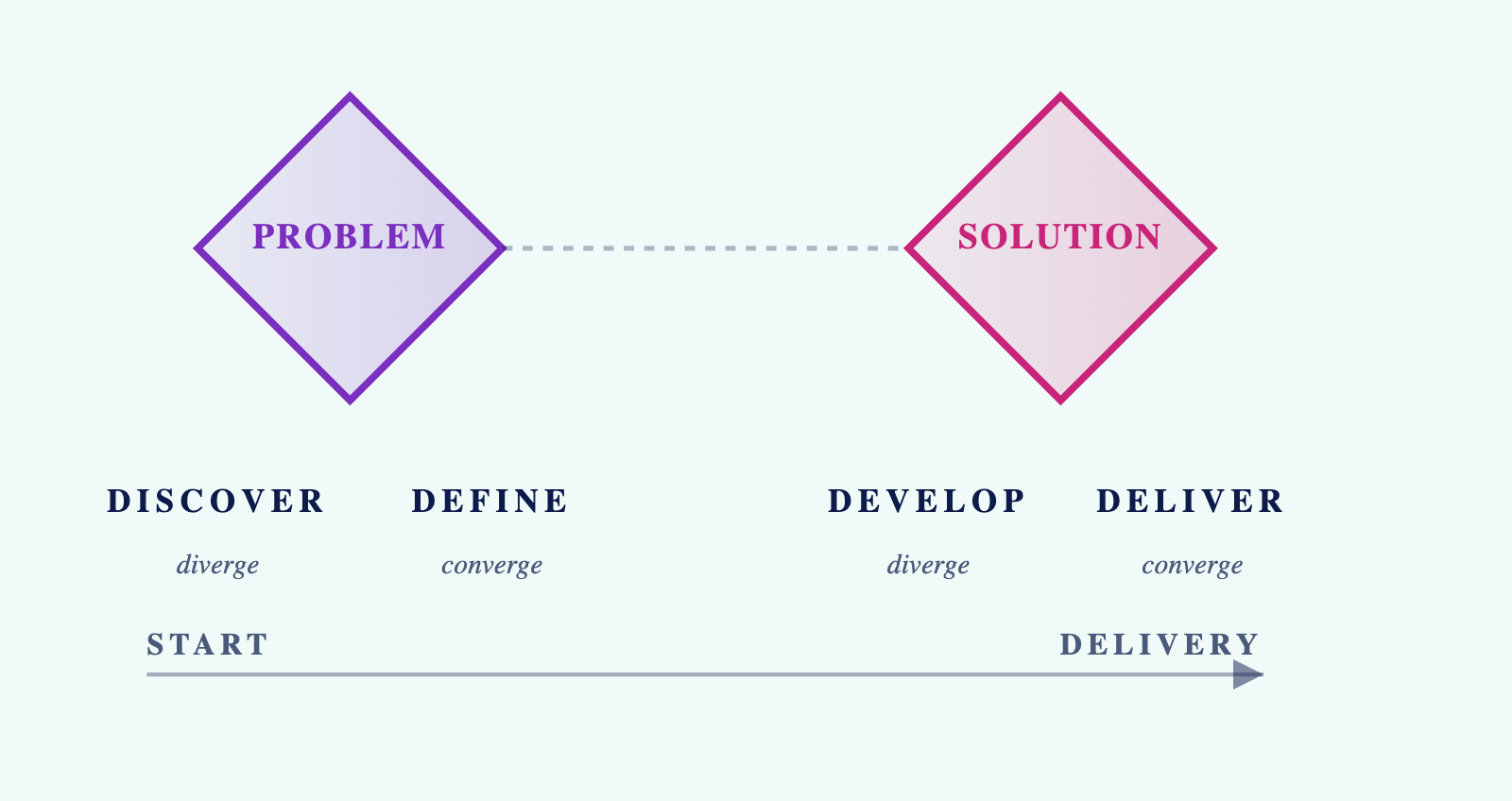
In practice, this means taking everything from your research and asking: what did we learn that we didn't already know? What surprised us? What contradiction did we find between what customers say and what they do?
"How Might We" is a reframing practice that takes a problem and turns it into a design opportunity. "Customers keep dropping off at checkout" is a problem. "How might we make the checkout experience feel like the easiest part of the day?" is a design opportunity. One closes down thinking. The other opens it up.
This step also matters because it's where you decide scope. A full service redesign and a single touchpoint improvement are both valid outcomes of a service design process, but they require different commitments and resources. Defining the problem tells you which one you're actually doing.
Take the low point you identified in Module 03. Write it as a "How Might We" statement. One sentence, open-ended, specific enough to design toward. That is your design brief.
Drawing It: The Service Blueprint
This is the moment everything becomes visible.
A service blueprint is a diagram that maps your entire service, every layer of it, on a single page. It stacks what the customer sees and does on top of the operations that make that possible, separated by a line that marks the boundary between visible and invisible. Above the line: what your customers experience. Below the line: everything that's responsible for that experience, whether they can see it or not.
Most founders who draw their service blueprint for the first time describe the same experience: disorientation followed by clarity. Disorientation because they see for the first time how many moving parts there actually are, how many handoffs exist that nobody officially owns, how many assumptions have been running unchecked. Clarity because once it's visible, it can be addressed.
The lanes of a service blueprint
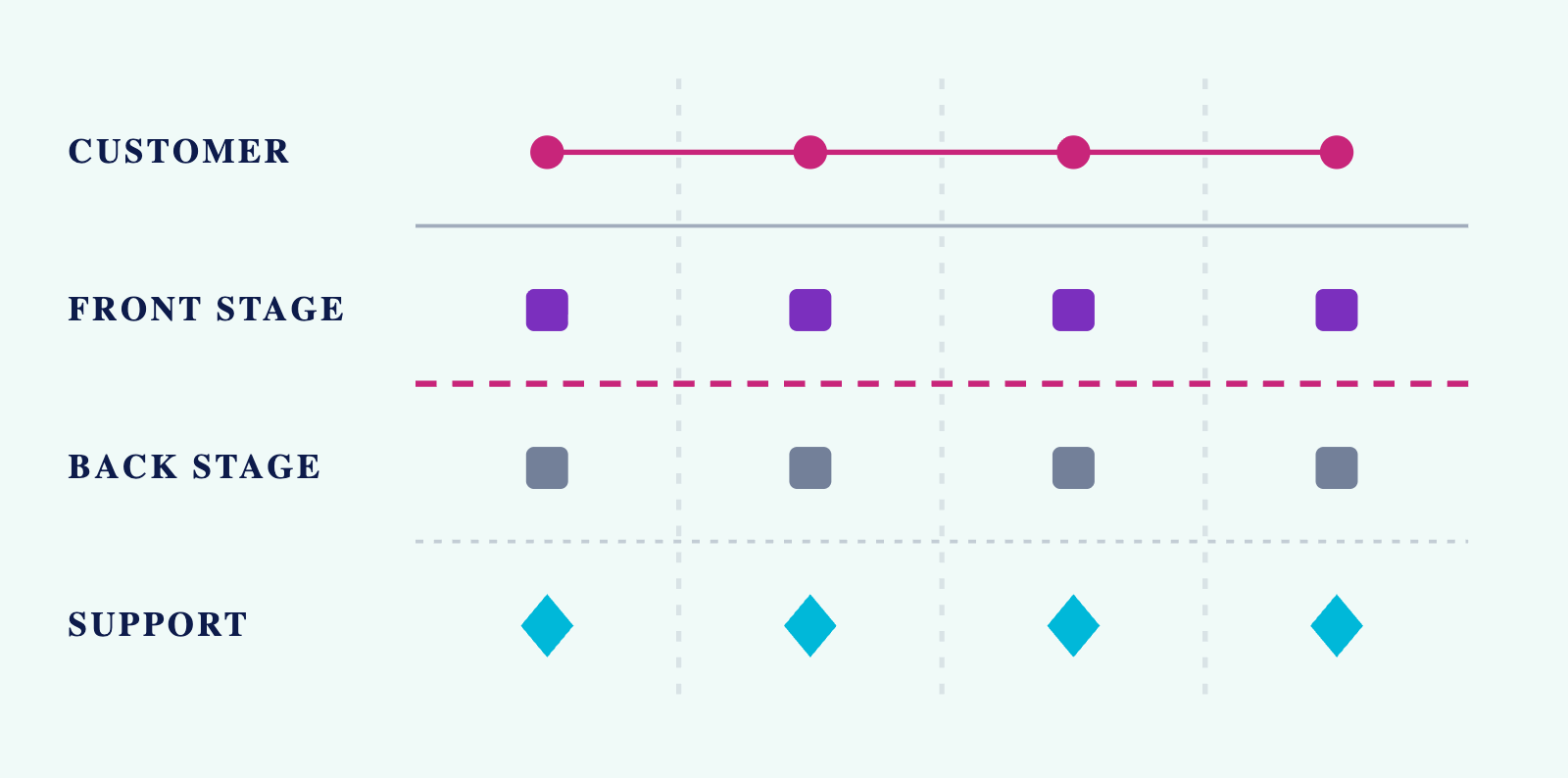
What the customer does at each stage: search, evaluate, book, arrive, experience, follow up, return or don't.
Everything the customer sees and interacts with: your website, your staff, your space, your communications, your packaging. This is where touchpoints live. This is where moments of truth happen.
Separates what the customer can see from what they can't. Everything above it is your customer experience. Everything below it is your operational infrastructure.
The internal work that makes front stage possible: scheduling, preparation, quality checks, internal communication, training, fulfillment.
The systems and tools underneath everything: the CRM, the payment gateway, the inventory system, the policies that govern how decisions get made.
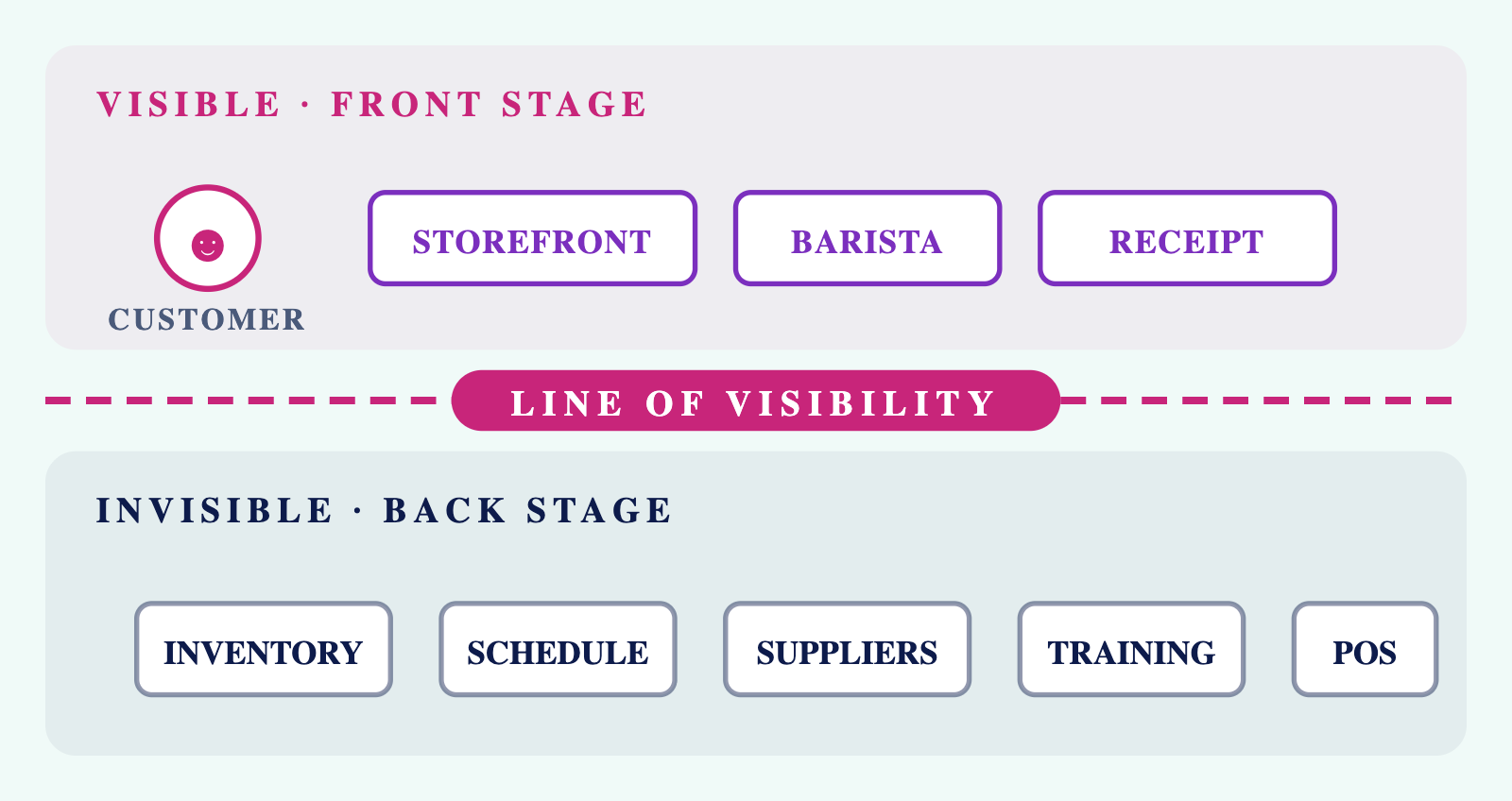
Fail points are where things break. Handoffs are where things get dropped. Most service failures happen at handoffs — not because people are careless, but because nobody designed what happens when responsibility moves from one person, system, or stage to another.
Draw a rough service blueprint for one stage of your customer journey. It doesn't have to be beautiful. It has to be honest. Start with what the customer does. Then ask: what are we doing in response, visibly and invisibly? That's your first draft.
Finding the Gaps: Friction, Fail Points, and the Moments That Matter
Once you can see your service, the real work begins.
This module is about diagnosis — not in a clinical, audit-heavy way, but in the way an experienced eye walks into a space and immediately notices what's not working, because they know what to look for.
Fail Points
Fail points are specific moments where the service breaks down. A payment gateway timeout. An appointment reminder that never sent. A handoff between sales and onboarding that everyone assumes the other person is managing. Most fail points are quiet — not catastrophic, just consistently disappointing.
Friction
Friction is the cumulative weight of small obstacles. Research published in The Effortless Experience by Dixon, Toman, and DeLisi found that reducing customer effort, not creating delight, is the single strongest driver of loyalty. Every unnecessary step, every unclear instruction, every moment where the customer has to figure something out that should have been figured out for them — that's friction. Eliminate it before you add flourishes.
Moments of Truth
Moments of Truth are the high-stakes positive touchpoints where, if you get them right, you change how someone thinks about your business permanently. First impressions. The first time you deliver on a promise. The first time something goes wrong and you handle it so well the customer trusts you more afterward than they did before. These are the moments people talk about. Design for them deliberately.
Recovery Plans
Recovery plans matter more than most businesses are willing to admit, because failure is inevitable. The question is never whether something will go wrong. It's whether you've already decided what you'll do when it does. A business with a clear recovery plan retains customers through failures. A business without one loses them — and often doesn't know why.
Name one fail point in your service right now. Just one. Then write out what your recovery looks like when it happens. If you don't have one written down, that's your first deliverable from this course.
What Comes Next: From Understanding to Action
A course is a starting line, not a finish.
By now you have a clearer picture of your service than most businesses ever develop intentionally. You know your market context and your assets. You understand your customer at a human level. You've defined a problem worth solving. You've drawn at least a rough version of your service blueprint. You've identified where your service is failing quietly and where it has the potential to shine loudly.
Identify where you are in the 4D process right now: Discover, Design, Develop, or Deliver. What is the single most honest next step from where you're standing?
Quiz Locked
Complete all seven modules to unlock the end-of-course quiz.